Legacy modernization and architecture
Legacy modernization: upgrade Java, PHP and .NET systems without stopping the business
Older systems often run the business but are slow to change, hard to deploy and difficult to hire for. Modernization does not have to mean a risky rewrite.
At HCL Technologies I worked on enterprise systems for Cisco, Telstra, Symantec and Openwave: Java and Spring backends, microservices, build automation and management consoles. Today I also add AI features, such as document search and agents, to existing products.
Problems I solve
Every change is risky
Without tests and clear boundaries, small changes break things. I add regression coverage before changing behaviour.
Slow pages and timeouts
Performance problems usually hide in queries, caching and synchronous work. I measure first, then fix what matters.
Manual, fragile deployments
Manual releases slow teams down. CI/CD with Jenkins, GitHub Actions or Docker makes releases routine.
No path to AI features
Legacy data can power RAG search and agents without a rewrite, through well-designed APIs around the existing system.
What I build
- Architecture review
- A written assessment of the current system, risks and a phased modernization plan.
- Incremental refactoring
- Strangler-pattern migration to services or a modern framework, one module at a time.
- Upgrades
- Java and Spring Boot, PHP and Laravel, .NET version upgrades with tests to prove nothing changed.
- Performance work
- Query optimisation, caching with Redis, background jobs and profiling.
- Cloud and DevOps
- Containerisation with Docker, CI/CD pipelines and migration to AWS or managed services.
- AI integration
- RAG search over existing data and agents that use the legacy system's APIs safely.
Related work
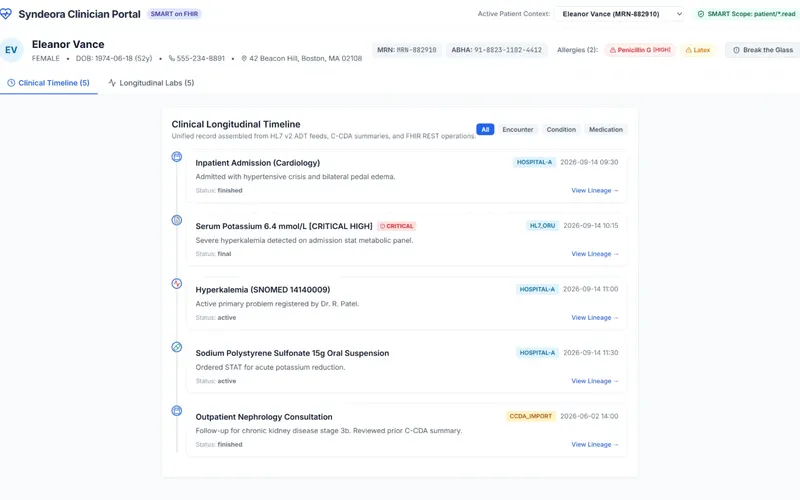
FHIR R4 interoperability hub & SMART on FHIR clinician platform
Syndeora
A Java 21 / Spring Boot 3 healthcare integration hub that turns HL7 v2 feeds and C-CDA documents into validated FHIR R4 records, with patient matching, consent, CDS alerts and SMART apps.
Read the case study →
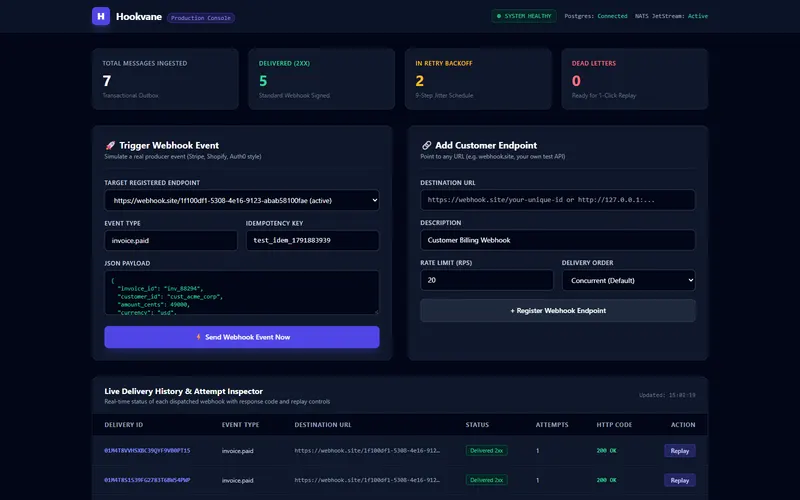
High-throughput webhook delivery engine in Go
Hookvane
A distributed webhook delivery platform in Go: transactional outbox and NATS JetStream for at-least-once delivery, per-endpoint circuit breakers, SSRF protection and signed webhooks.
Read the case study →
- wholesale-ordering-platform
Order-to-shipment platform for a hemp/CBD distributor
B2B Wholesale Ordering Platform
Replaced a distributor's legacy wholesale site with an in-house Java platform: live inventory, multi-carrier shipping rates, quotes, payments and a sales dashboard.
Read the case study →
How we'll work
Step 1
Understand before changing
Read the code, map dependencies and talk to the people who run it.
Step 2
Add a safety net
Regression tests and monitoring around the parts that will change.
Step 3
Modernize in slices
Small, reversible steps that each ship to production.
Step 4
Hand over
Documentation, runbooks and a team that can keep improving it.
Technology
- Java 21
- Go
- Spring Boot 3
- Hibernate
- HAPI FHIR
- RabbitMQ
- Keycloak
- JSF / PrimeFaces
- Microservices
- JUnit
- PHP
- Laravel
- .NET (C#)
- Python
- Jenkins
- Maven
- SVN / Git
- Docker
- AWS
- PostgreSQL
- MySQL
- Semgrep
- SonarQube
Frequently asked questions
Do we need a full rewrite?
Rarely. Most systems can be modernized incrementally, replacing one part at a time while the business keeps running.
Which legacy technologies do you work with?
Java and Spring, J2EE, PHP and Laravel, .NET and C#, Python, MySQL and PostgreSQL, from enterprise delivery at HCL and freelance work since.
Can you add AI features to an old system?
Yes. Document search, chatbots and agents can sit alongside the existing system and use its data through APIs, without changing its core.
Do you start with an assessment?
Yes. A short architecture review gives you a written plan with risks and phases before any large change is committed.
Tell me what you're building
A short description of the problem and your data is enough. I'll reply with questions and a time for a call.
Start a project